From Alert Fatigue to Cognitive Harmony: When to Present Clinical Information


Healthcare technology promised to make clinicians smarter and faster. Instead, it's making them more distracted and burned out. The problem isn't the technology itself—it's when and how we're delivering information.
The Real Cost of “Helpful” Alerts
Picture this: You're a care manager having a sensitive conversation with a member about their medication adherence. Mid-sentence, a notification pops up reminding you to ask about their flu shot. Another alert warns about a potential drug interaction. A third banner suggests a care pathway. Your attention fractures. The member notices you're distracted. The moment is lost.
This isn't a hypothetical problem. It's an epidemic.
Recent research reveals that 55% of physicians admit to dismissing alerts without even reading them. [1] In one study tracking alerts over a decade, override rates climbed to 88%—even for serious clinical warnings, which were ignored up to 74% of the time. [2] Perhaps most alarming, a 2025 study found that alert fatigue contributed to a 14% increase in medical errors. [3]
The numbers get worse when you zoom out. Intensive care unit monitors generate an average of 187 alerts per patient per day. Physicians experience roughly 10 interruptions per hour, nurses 12 per hour, and after each interruption, clinicians typically complete 1-8 other tasks before returning to their original work. [4] The cognitive fragmentation is relentless.
But alert fatigue is just a symptom. The deeper issue is that we're fundamentally misunderstanding how healthcare professionals learn, work, and deliver high-quality care.
Your Brain Wasn't Built for This
When a care manager converses with a member, they're simultaneously listening, demonstrating empathy, processing clinical information, recalling protocols, making decisions, building trust, and documenting everything. This work already operates at the limits of human cognitive capacity.
Cognitive Load Theory explains why adding real-time alerts makes things worse, not better. Working memory has a sharply limited capacity—when exceeded, performance deteriorates across every dimension. [5] The clinical work itself creates substantial intrinsic cognitive load. Real-time alerts add extraneous cognitive load, stealing mental resources that should be dedicated to the patient.
More critically, processing alerts during conversation creates what researchers call dual-task interference. Your brain can't effectively handle two demanding tasks simultaneously. Studies show that engaging in conversation significantly impairs performance on concurrent cognitive tasks—the increased demands of speech planning and monitoring consume most available attention. For care managers, this means processing an alert during conversation doesn't just add work—it actively degrades both the conversation quality and their ability to meaningfully process the alert itself.
Then there's flow state—that state of complete absorption where professionals do their best work. Flow requires sustained, uninterrupted focus. Real-time alerts are flow assassins. Every interruption fragments attention, making it impossible to achieve the deep presence that high-quality, empathetic care requires.
The Science of Better Timing
If real-time doesn't work, when should information be delivered? Science points to two crucial windows: before the interaction and after it concludes.
Before: Prepare Without Pressure
Pre-call preparation allows care managers to review comprehensive information without conversation pressure. They can scan care gaps, review clinical history, and formulate an approach at their own pace. This information becomes part of their mental model before the interaction begins, loaded into working memory and ready to guide—not interrupt—the conversation.
Pre-call presentation also enables richer information architecture. Care managers can drill into details when needed or quickly scan high-level summaries when time is tight. The interface can be comprehensive without being overwhelming because there's no competing demand for attention.
After: Learning That Sticks
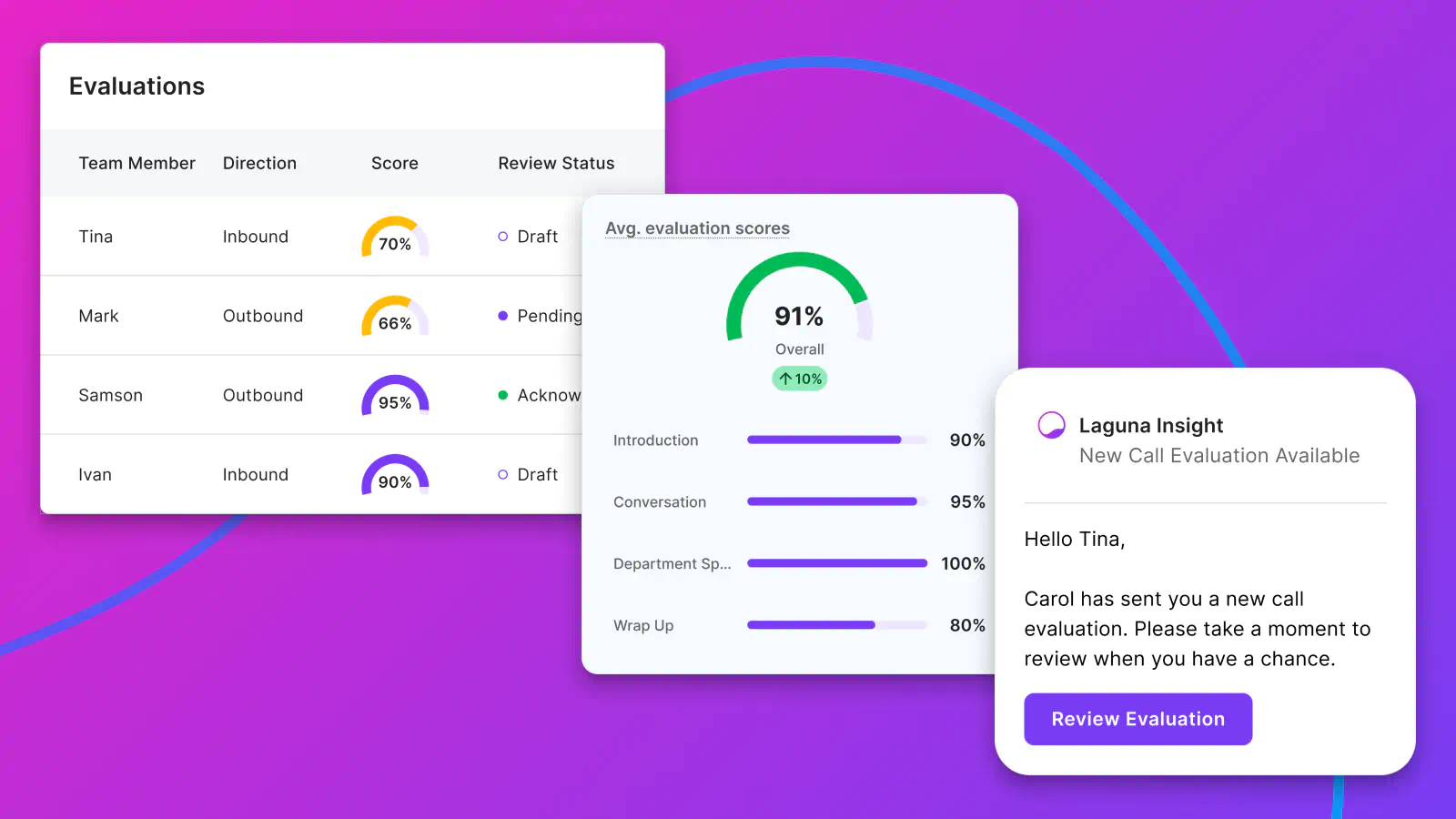
Post-call feedback might seem less immediate, but research reveals it's actually more effective for skill development. Studies show that learners who receive delayed feedback perform significantly better on transfer tasks—applying concepts to new situations—compared to those who receive immediate feedback, with effect sizes representing “the difference between earning a B and an A.” [6]
Why? Three mechanisms:
- Memory consolidation: The brain continues processing experiences for hours after they occur. Delayed feedback allows this natural consolidation without interference.
- Retrieval practice: Reviewing feedback later requires actively recalling the conversation, which strengthens memory traces more than passive, immediate correction.
- Desirable difficulties: The cognitive effort required to connect delayed feedback to the original experience creates deeper, more durable learning.
These principles are already embedded in effective medical education. Debriefing after simulation-based training—not coaching during the simulation—is recognized as the cornerstone of learning in medical education. The reflection, analysis, and integration that drives skill development requires dedicated cognitive space that simply doesn't exist during live patient interactions.
During: Pull, Don't Push
When information delivery during calls is necessary, the key principle is pull over push. Give care managers control. Let them query information when they need it rather than the system deciding what they need and when.
A prompt the system pushes is not the same as a question the care manager asks. Companion can answer when the care manager asks. It should not break the call with a prompt she did not request.
Practical implementations include:
- Toggleable notifications that care managers control
- Subtle visual indicators rather than intrusive pop-ups
- Chat interfaces for natural language queries
- Dismissible banners that provide information without demanding immediate attention
The goal is making information available without making it demanding. This respects professional expertise—expert care managers know what information they need and when. Technology should make access easy but trust their judgment about timing.
What This Means for Healthcare Technology
The alert fatigue epidemic stems from a fundamental mismatch between technology design assumptions and human cognitive realities. The solution isn't abandoning clinical decision support—it's reimagining when and how it's delivered.
Comprehensive preparation before interactions allows care managers to enter fully informed, with relevant context already integrated into mental models.
Minimal interruption during interactions protects flow state, enabling the deep presence and authentic connection that high-quality care requires.
Rich post-call feedback enables continuous improvement through reflective practice, leveraging natural mechanisms of memory consolidation and skill acquisition.
User-controlled access during calls respects professional expertise while still making AI analysis and information retrieval available when actively needed.
This isn't just theory. Recent data from healthcare organizations implementing these principles shows measurable improvements in both care quality and clinician satisfaction. When technology works with human cognition instead of against it, everyone wins—clinicians, because they can focus on what matters; members, because they receive more attentive, higher-quality care; and organizations, because they reduce errors, improve outcomes, and retain skilled professionals who aren't battling their tools.
The question for healthcare technology isn't “How do we get more information in front of clinicians?” It's “How do we present information in ways that genuinely enhance decision-making, protect attention, and support the human work of care?”
The answer lies in respecting timing, honoring cognitive limits, and trusting professional judgment. That's how technology finally delivers on its promise to enhance rather than burden clinical practice.
Get in Touch 👋
Let’s talk about how Laguna can Elevate Your Care 💜 Team