Post-call feedback

Capability · Post-call feedback
Strong relationships. Better quality. Supported care teams.
After every call, Laguna gives each care manager feedback: how the relationship went, what it observed, and a note just for them.
250,000+times care managers chose to open it
80%of active care managers, every month
During the call
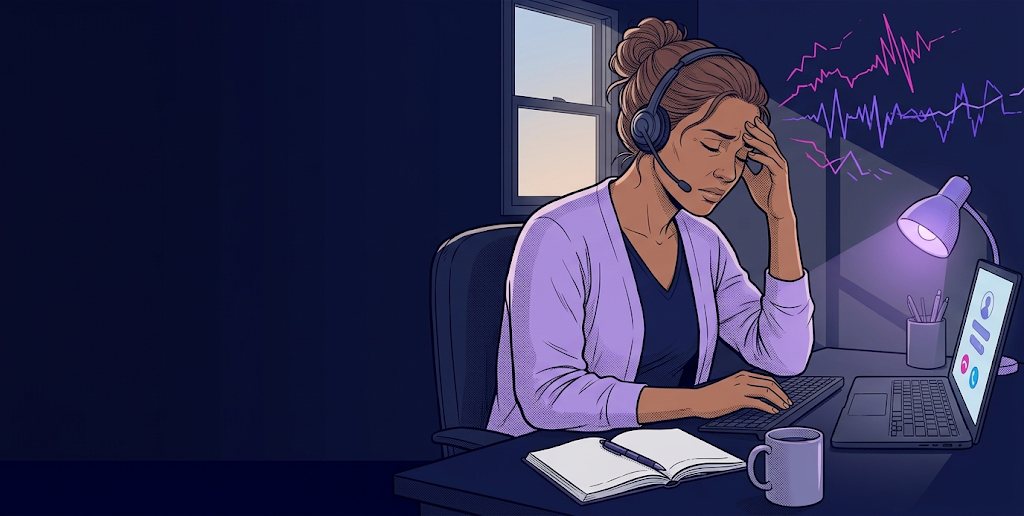
Care managers take the hardest calls in health care. Then they take the next one.
A member in crisis. A family in grief. A need the plan cannot meet. Most care managers go to the next call with no word on how they did. Strong performers wear down, and the rest get coaching too late.
After the call
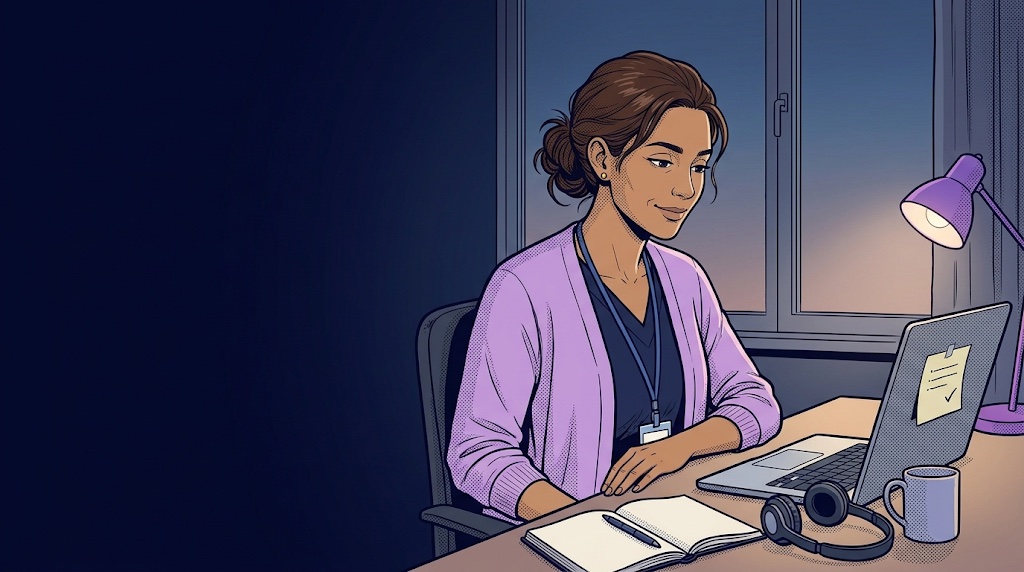
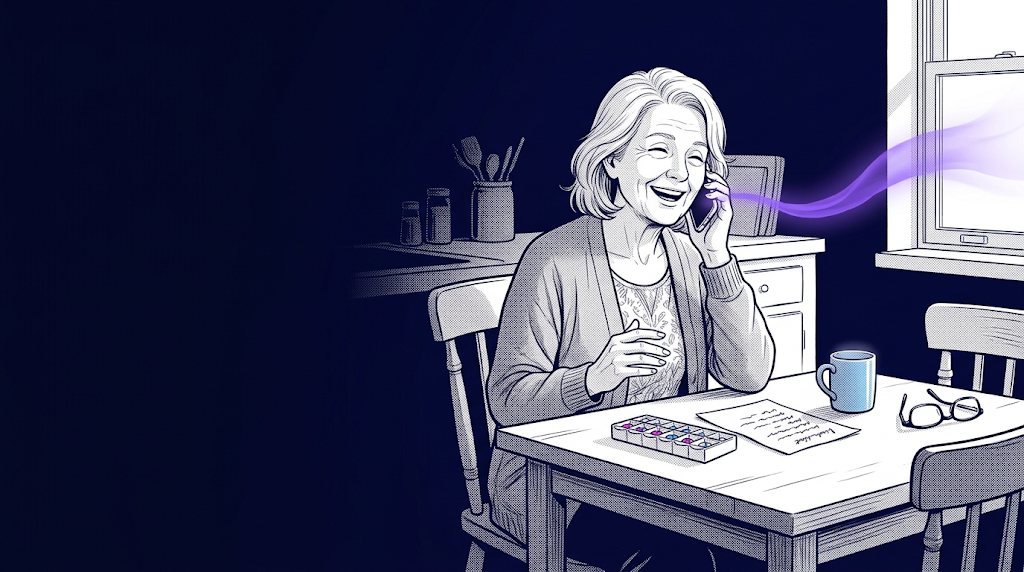
And after every hard call, Laguna is there for her, too.
Right after the call, Laguna shows the care manager what went well and what to try next, from the call they just finished. Recognition and coaching, after every call.
On her screen
Feedback after every call.
After every call
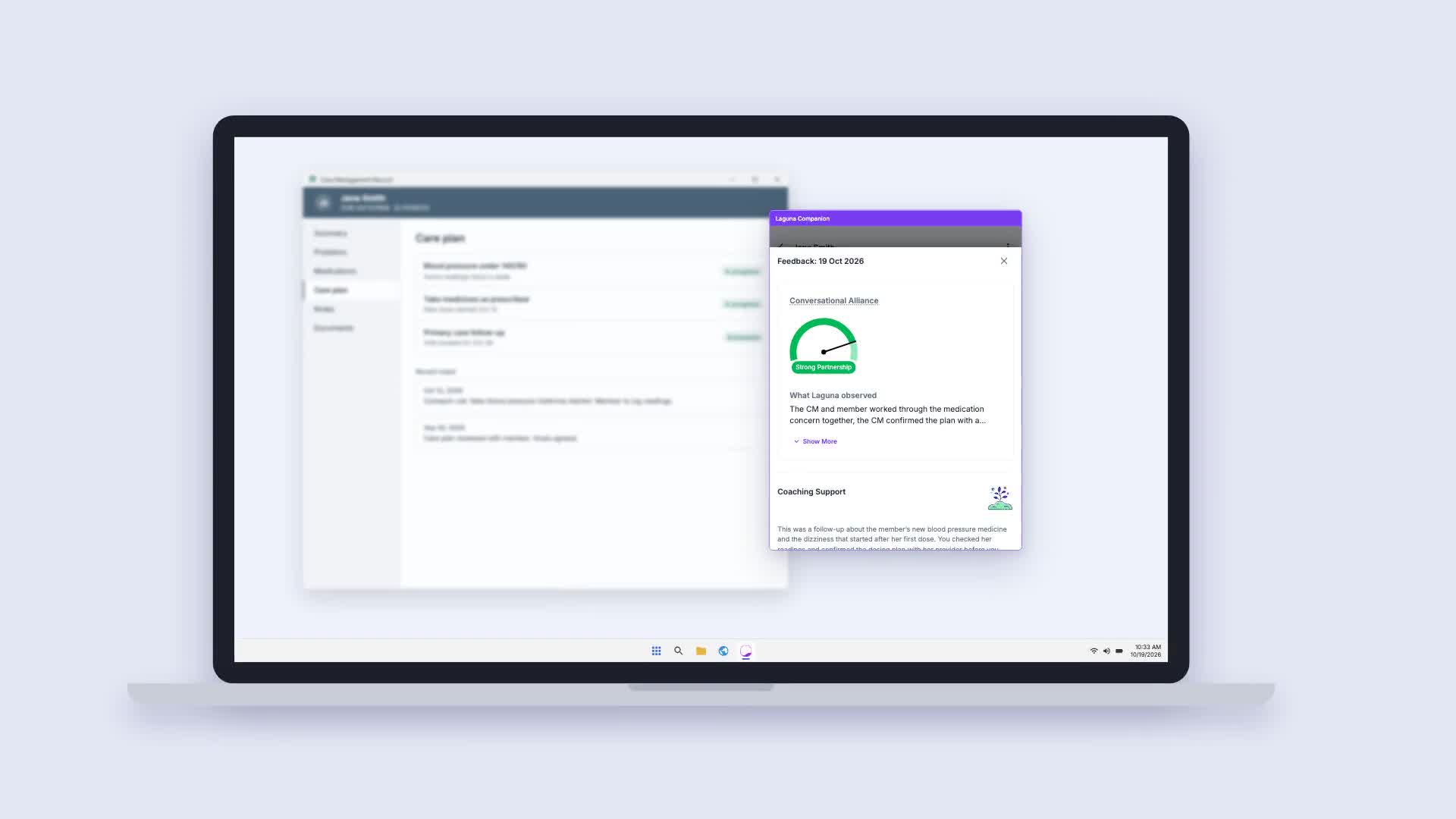
How the relationship went, what Laguna observed, and a note just for her.
The feedback sits on her laptop, on top of the record she already has open.
01 · Stronger member relationships
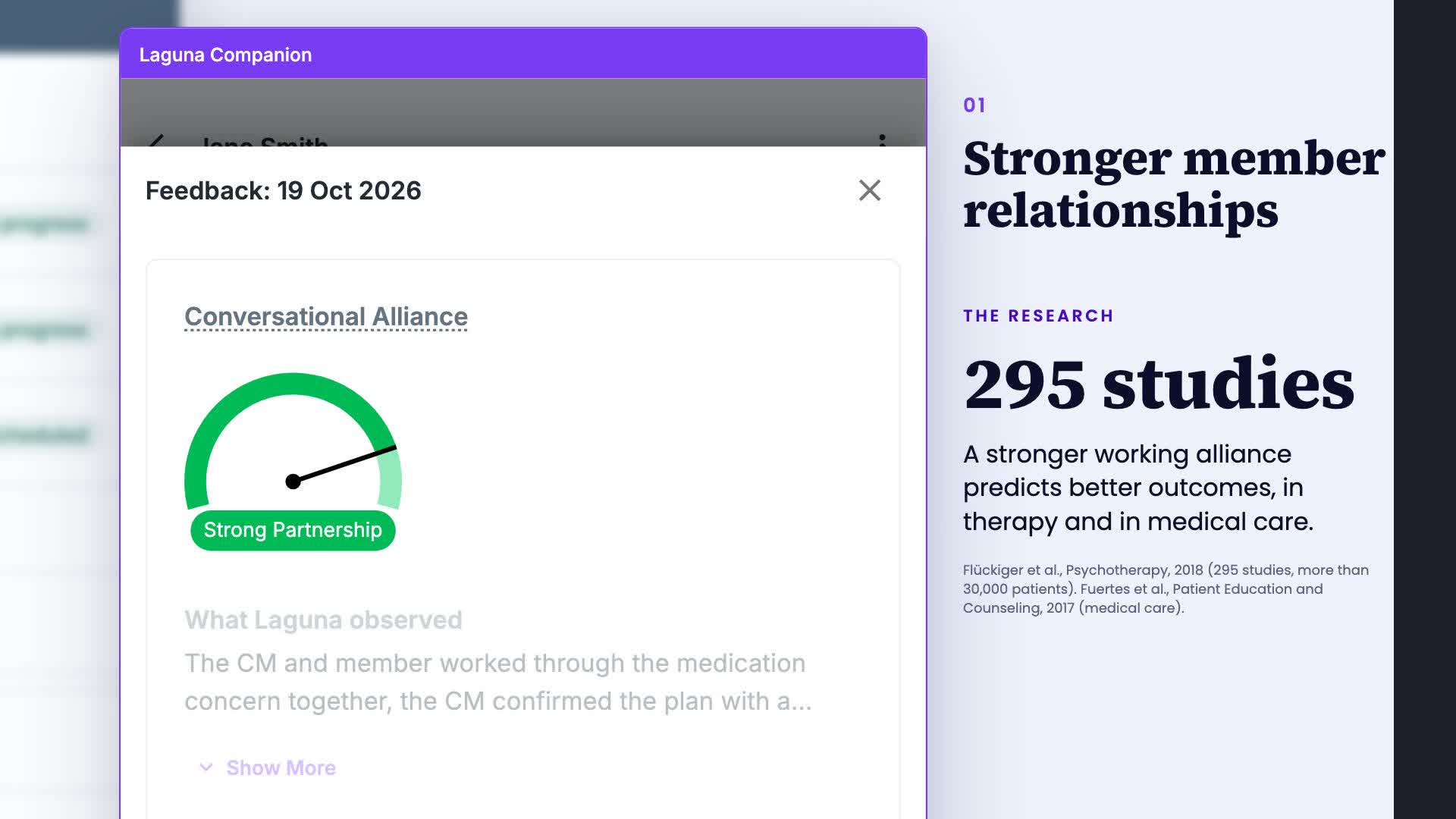
The gauge is the alliance.
Conversational Alliance scores how well she and the member work as a team. Across 295 studies, a stronger alliance predicts better outcomes.
Flückiger et al., Psychotherapy, 2018 (295 studies, more than 30,000 patients). Fuertes et al., Patient Education and Counseling, 2017 (medical care).
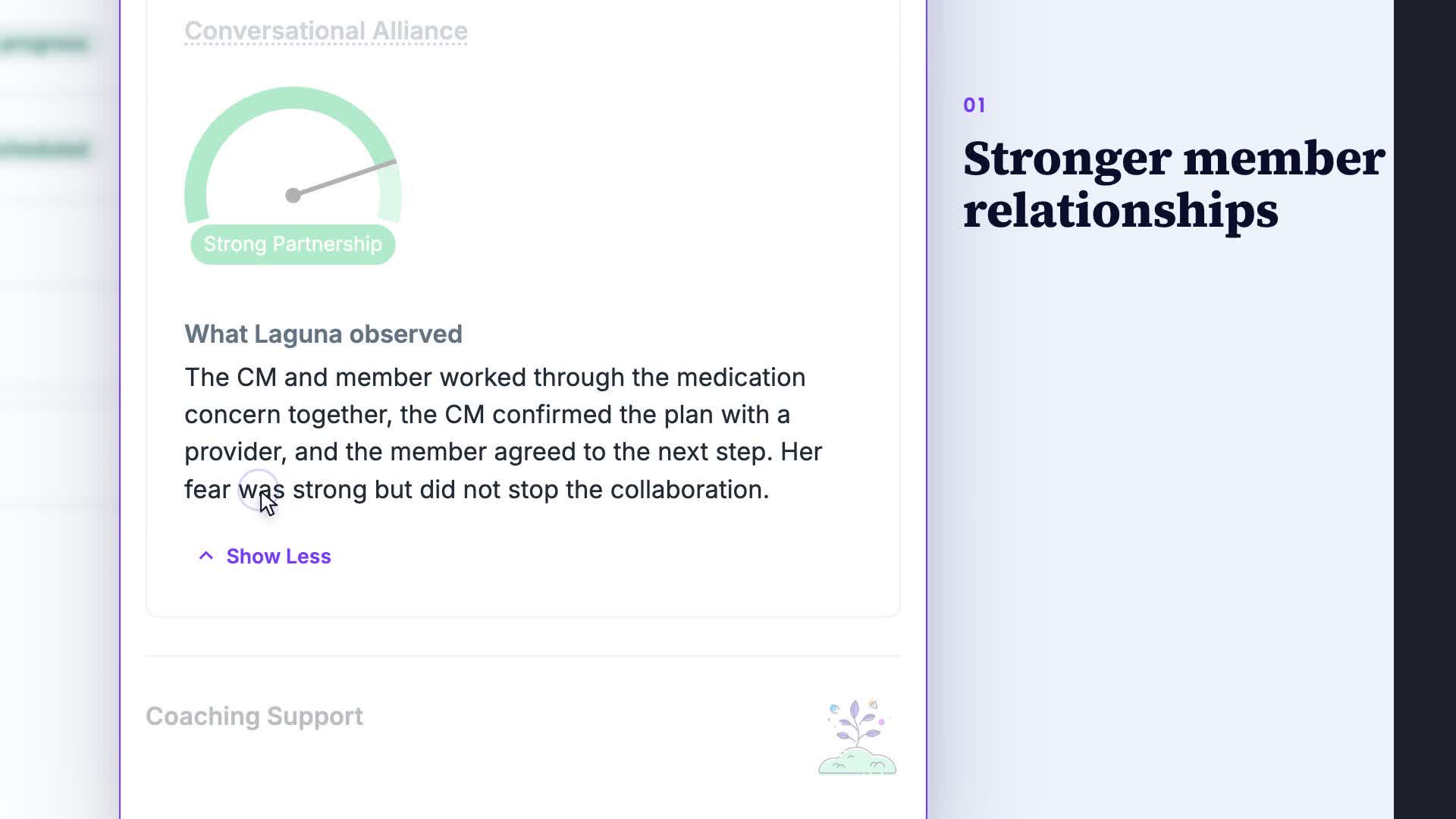
What Laguna observed
The moments behind the score.
Laguna shows what it observed on the call, in plain words. She sees why, not only how much.
02 · Better calls
A note on what she did well, and one thing to try next time.
Every call gets its own note. The hard conversations, and the ones that went right.
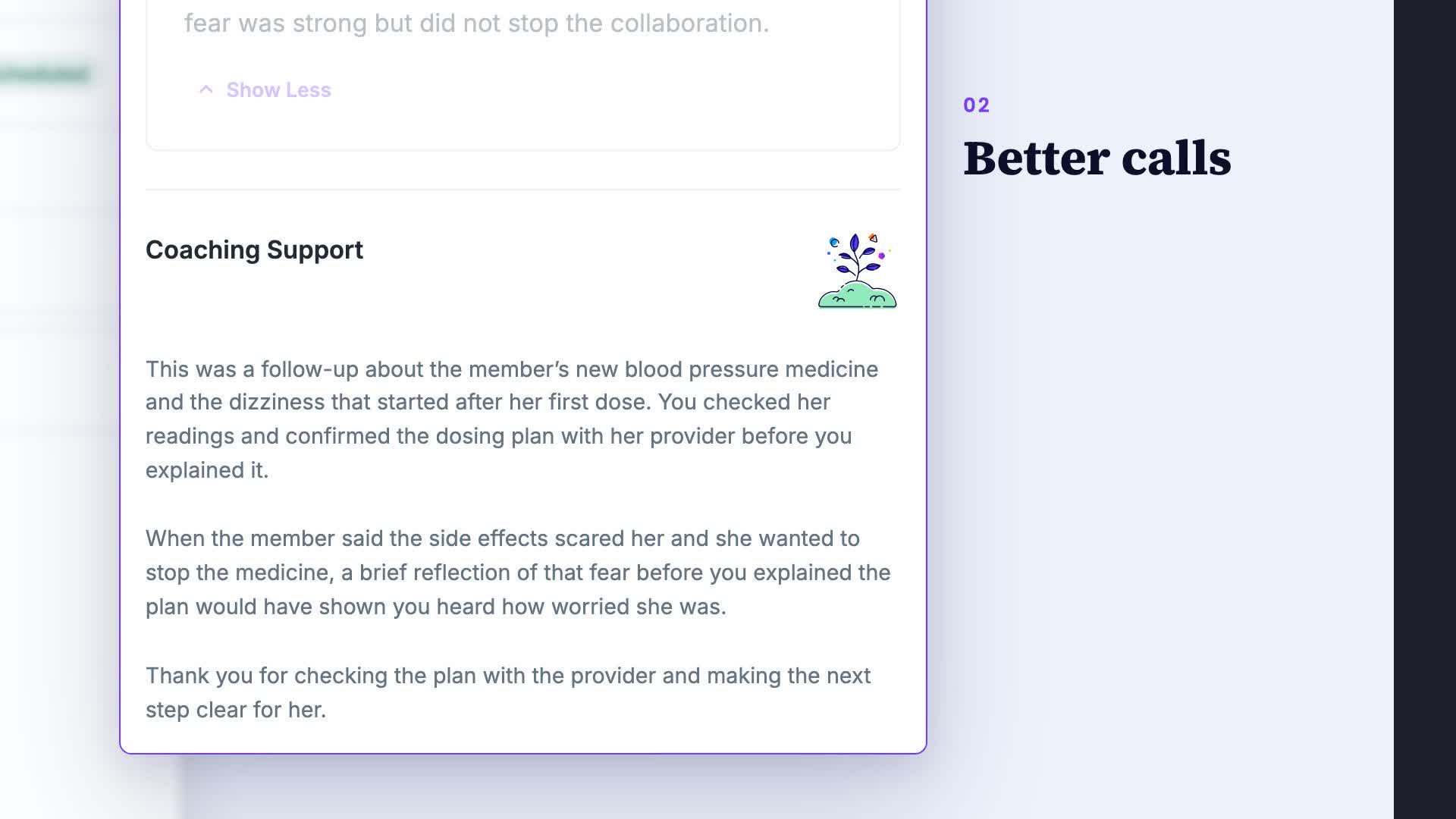
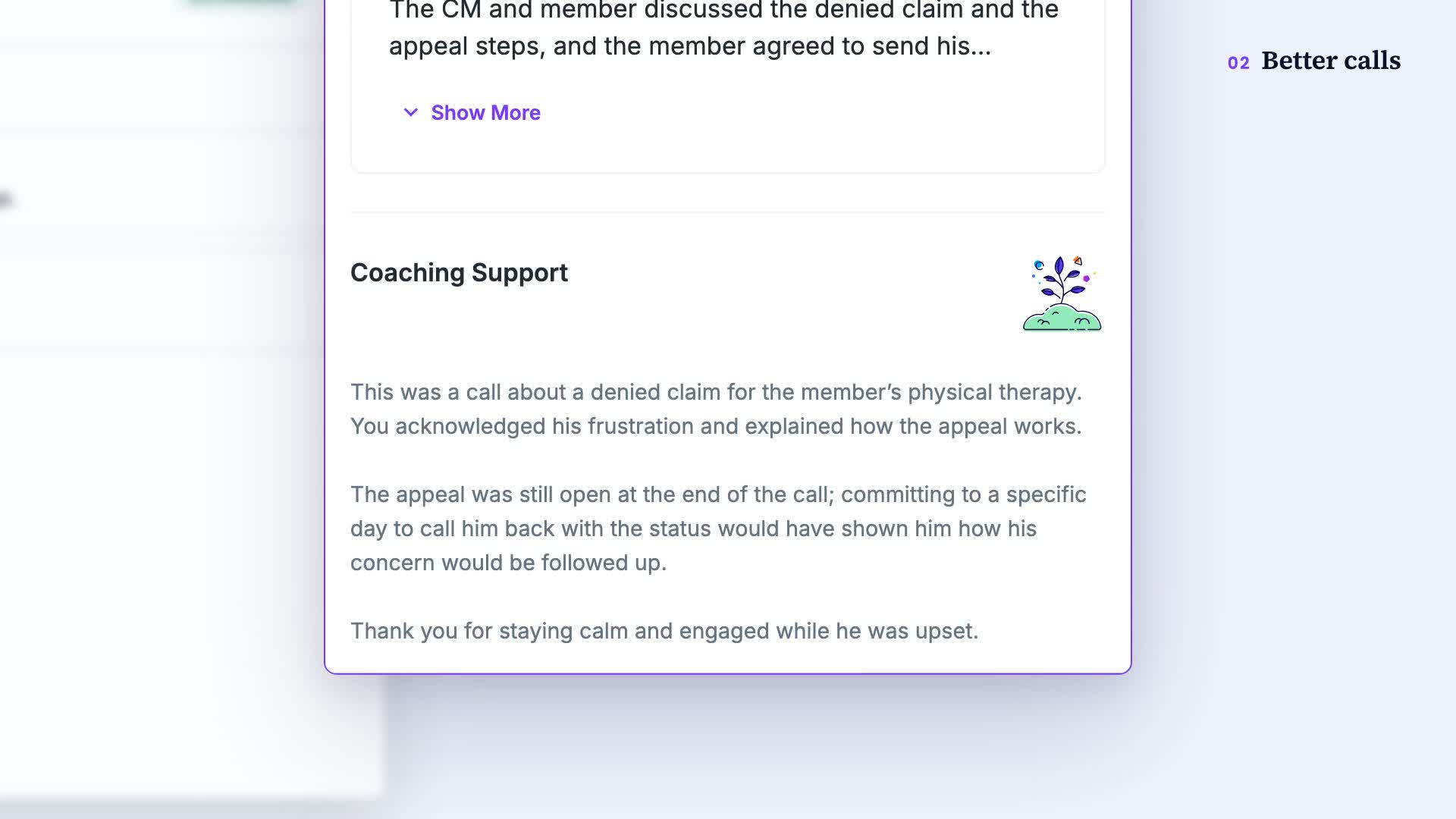
Then the next call.
Each call keeps its own note. She can move from one hard conversation to the next.
02 · Better calls
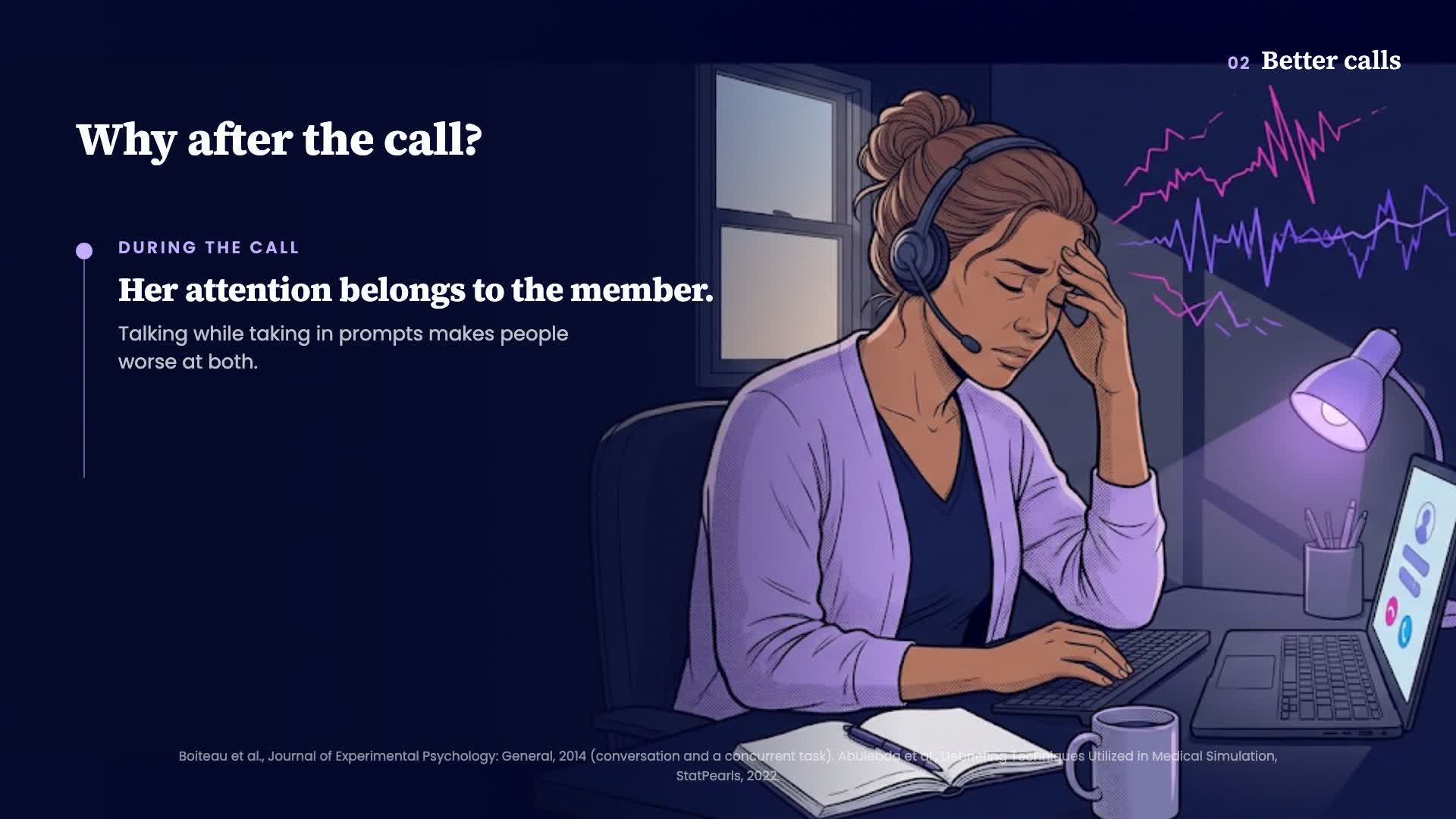
Why after the call?
During the call, her attention belongs to the member. People learn best when they reflect after it.
Boiteau et al., Journal of Experimental Psychology: General, 2014. Abulebda et al., StatPearls, 2022.
Supported care teams
Care managers do not need this screen. Yet 8 in 10 open it, every month.
The feedback is optional. Care managers open it because it helps them. That adoption has held for 18 months in a row.
80%of active care managers open it each month
Laguna post-call feedback: 80% a month, on average
Average core feature in business software: 24.5%
250,000+
feedback opens since April 2025
Nearly 800care managers have used it
About 40opens per care manager, every month
3×the adoption of a typical core software feature
The retention signal
The care managers who use it most are the ones who stay.
Turnover is one of the largest costs in care management. Feedback use is the strongest early signal of who stays that we have found.
In our churn model, how often a care manager opened feedback was the top predictor of retention. It carried more than twice the weight of the next signal. The chart shows the same pattern in the raw data.
Still making calls a year later
66%
84%
93%
Under 15 a month
15 to 50 a month
More than 50 a month
How often the care manager opened feedback
Three results
One screen. Three results for your program.
Strong relationships
Measure the relationship that drives outcomes.
The working alliance is one of the most studied factors in care. A stronger alliance links to better adherence, satisfaction, and outcomes.

Better quality
Coaching on every call, not a sample.
Every call gets feedback against your standards. Supervisors coach from evidence, and care managers improve call by call.

Supported care teams
Recognition after the hard calls.
Care managers hear what they did well, in a way they call encouraging and non-punitive. Teams that feel supported stay.
In their words
“It’s like my cheerleader.”
Care managers tell us, in their own words.


“It’s like my cheerleader. It tells me, yes, you did good.”

“It’s like getting a gold star.”

“I am obsessed with the feedback.”
Fits your program
Your standards. Your soft skills.
Your standards
Your program chooses the standards and soft skills that the feedback scores, from empathy to motivational interviewing.
Supervisors stay in charge
The feedback supports supervisors. It does not replace them. They review the call, coach, and decide.
Built for member data
Laguna works under a BAA with your plan. Our AI providers cannot use your data to train their models.
Questions
What teams ask us.
Does the feedback interrupt the call?
No. The feedback shows after the call ends. During the call, the care manager’s attention stays on the member.
Who sees the feedback?
The care manager sees it in Companion. Supervisors see the same feedback in Insight. It tells the care manager what went well and what to try next time.
Why measure the alliance?
The working alliance is agreement on goals, agreement on next steps, and a bond of trust. Research in psychotherapy, medical care, and rehabilitation links a stronger alliance to better adherence, satisfaction, and outcomes.
Can we set our own standards?
Yes. Your program chooses the standards and soft skills that the feedback scores. Laguna sets them up with your clinical and quality leaders.
What do the numbers mean?
The usage numbers are totals across all Laguna customers. The retention chart follows 339 care managers from mid-2025 for one year. It shows an association, not a cause.
Strong relationships. Better quality. Supported care teams.
See what post-call feedback looks like for your program.
Usage: Laguna product analytics, all customers, April 2025 to October 2026. Active care managers made at least one call in the month. Retention chart: 339 care managers with 30 or more calls from June to August 2025, by feedback opens in that period. A care manager counts as still making calls with at least one call from April to June 2026. Churn model: 285 care managers at two customer organizations, 2025. Benchmark: Userpilot, Product Metrics Benchmark Report, 2024. The data is observational. It shows an association, not a cause.